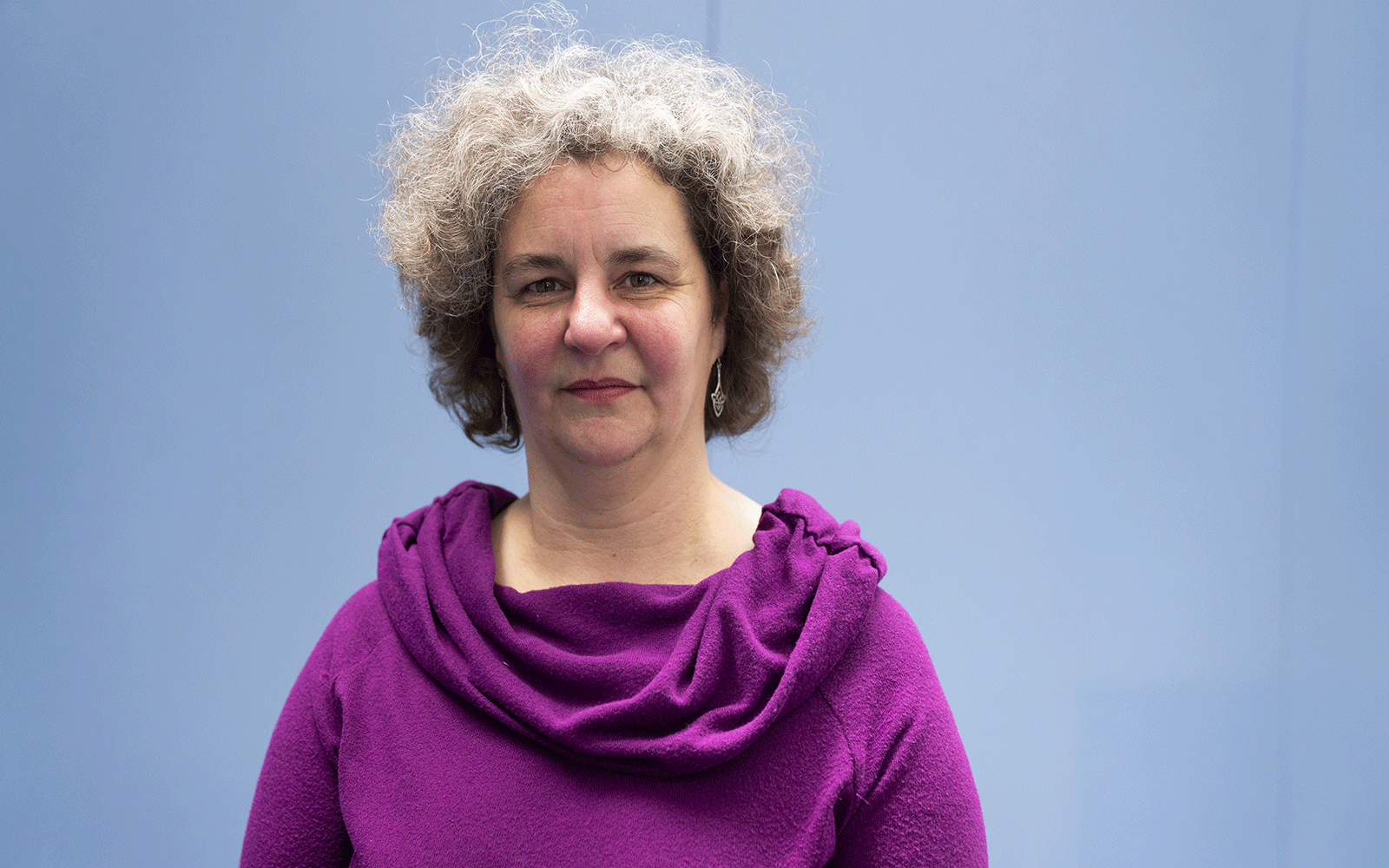
Founded in 1978, the UK charity Teaching Statistics Trust (TST) runs an annual lecture series for teachers of statistics in secondary schools, colleges and the early years of university. Rachel Hilliam, professor of statistics at the Open University, is the TST lecturer for 2025-26.
You will be the TST lecturer for 2025-26, and your lecture is entitled: A Data Literate Society Without the Fear Factor. Why have you chosen this topic and what can your audience expect?
Having worked as a statistician for many years, I am very aware of the anxiety the word “statistics” can provoke. That fear factor is one of the biggest barriers we face and we need to change the narrative around data. This involves not only changes the mindset of policymakers, but also ensuring teachers, students and parents recognise data is already embedded in their everyday life, rather than something that is abstract and scary. There were a number of reports produced last year with the aim of informing the recent political focus on curriculum. I will outline some of these recommendations, which include the need for greater data literacy skills and, with the rapid rise of AI, this need is even more pressing. Data underpins every part of our lives and, whether people realise it or not, they are interacting with data on a daily basis, at work, rest (if, like my son, you are wedded to your Garmin) and play. In this lecture, I will explore how we might develop data literacy skills across the curriculum and how we can empower young people to question, interpret and use data with confidence. Ultimately, this lecture is an invitation to re-frame data as something participatory and relevant; data is everywhere, so it’s time for everyone to join the party!
Maths/stats anxiety is widespread among the general public – what are the most common things you’ve heard people say?
For many years, I actively avoided telling people I was a statistician because the reaction was so predictable. The most common responses were, “I hated maths at school,” or “I was rubbish at it”. Another frequent comment was, “You can make statistics say anything you want, can’t you?” which, sadly, reflects a deep mistrust of data. I think we need to ask ourselves whether these responses are based on a person’s ability or their experience.
Interestingly, Covid marked a real turning point for me. Suddenly, saying you were a statistician prompted genuine curiosity rather than defensiveness. People wanted to understand uncertainty, risk, graphs and modelling, because it directly affected their lives. It showed me that when data feels relevant and human, anxiety can be replaced by engagement. A more personal moment came from my sons, who are now both jazz musicians and have no interest in mathematics, but during Covid joked that I was the only member of the family doing a vaguely useful job, which was perhaps a little unfair on my husband! But what matters is both of them are actually highly data literate in practice, without realising. They are quick to question claims in the media, ask about bias, and challenge how evidence is presented, even though they would never describe themselves as “good at maths”. That experience has reinforced my belief that data literacy is about confidence, curiosity and critical thinking. I now try to steer any conversation about my job towards data rather than statistics, and that almost always leads to an interesting and engaged discussion.
Recognise that statistical anxiety is not always about a fear of mathematics. I teach a number of strong mathematics students who struggle with the idea of uncertainty
Do fears and attitudes differ from age group to age group, in your experience?
That’s a really interesting question, and it’s one I would like to explore in more depth through further research. From the work I have done so far, what is clear is that anxiety around statistics doesn’t manifest in the same way for everyone.
For example, among Open University students studying across different disciplines, I’ve observed distinct patterns of statistical anxiety. Importantly, this anxiety is not always about numbers or mathematics. For some people it is, but for others it relates to discomfort with uncertainty, difficulty interpreting results, concerns about collecting or evaluating data, or anxiety around using statistical or computational tools. This suggests that fears and attitudes are likely to vary across age groups as well. I suspect that at every age there are groups of people experiencing different types of statistical anxiety. What matters most is recognising that these different forms of anxieties exist and giving people the right skills, language and experiences to empower them to engage with data more confidently.
What is your advice to fellow educators on tackling it?
Firstly, recognise that statistical anxiety is not always about a fear of mathematics. I teach a number of strong mathematics students who struggle, not with mathematics but with the idea of uncertainty. Until we understand what is making an individual anxious, it’s very difficult to address it effectively. Once we’ve successfully identified the concern, we can start to equip people with the right skills and strategies to build confidence and resilience when interpreting results, working with real data, or becoming comfortable with the ideas of uncertainty and risk.
The second point is to make data feel familiar and relevant. Data is already part of people’s daily lives through fitness apps, streaming recommendations or social media analytics, and they routinely make decisions based on that data, usually without any anxiety at all (even if they are concerned about their step count for the day)! If people realise that they are already data users, then the fear factor starts to diminish, and genuine curiosity and confidence can begin to develop.
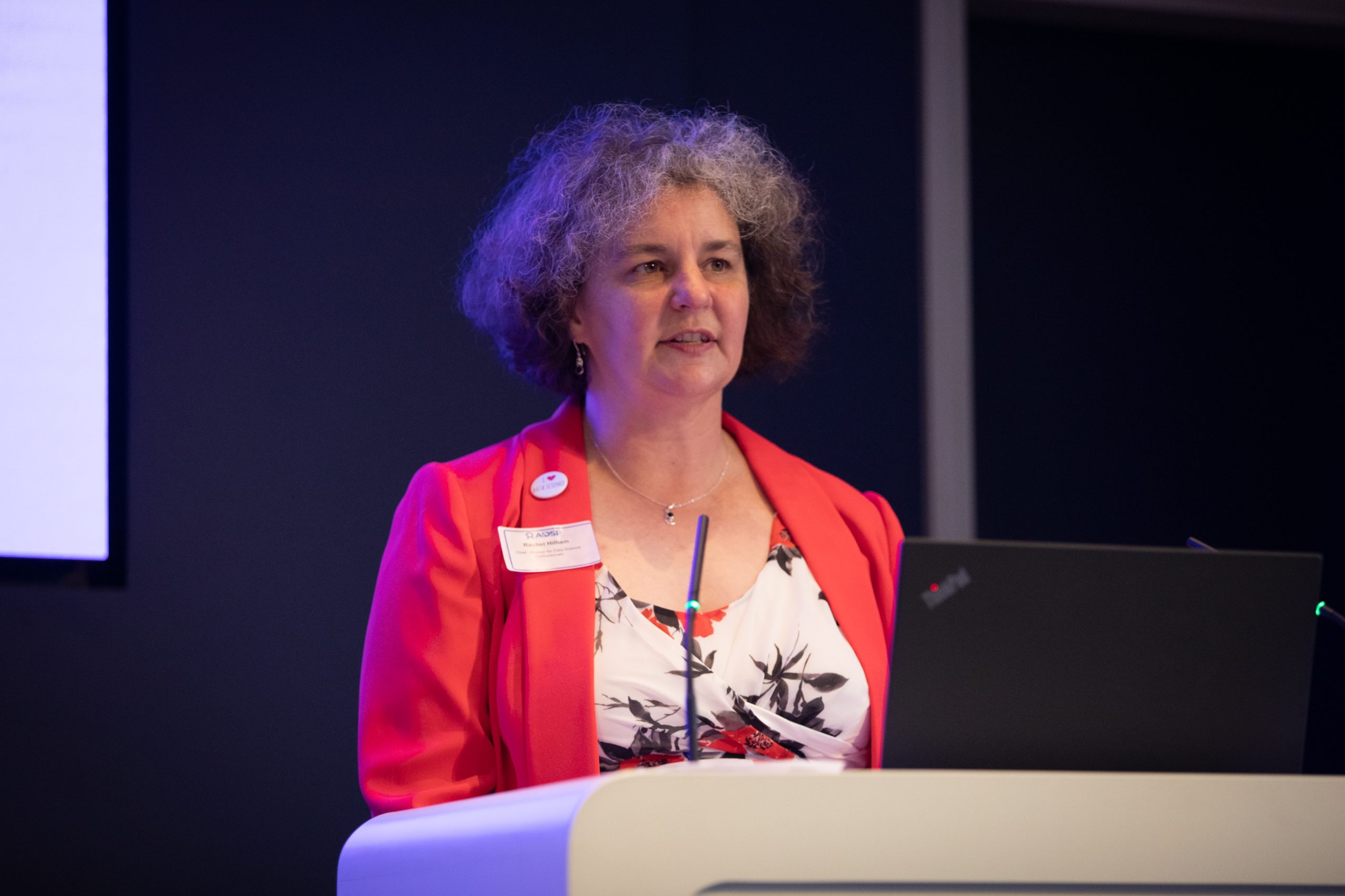
Rachel Hilliam played a key role in launching the data science degree at The Open University in 2019.
Can you share any specific examples of when a novel approach to teaching statistics really cut through with a struggling student?
I wouldn’t claim that my approaches are novel in the sense of being entirely original; they are very much built on the ideas and good practice of others. What has consistently made a difference, particularly for struggling students, is shifting them from being passive recipients of data to active creators of it. Once students are responsible for deciding what to measure and how to collect it, discussions about bias, missing data and limitations suddenly become much more meaningful. If I’m helping an individual student, I try to find out what makes that student “tick”. We can then have a much richer conversation about data quality and interpretation. Over the years, teaching large numbers of students has given me a surprising insight into an enormous range of interests, from underwater hockey (which I’ve learned is probably not a great spectator sport) to lightboats. I’ve also drawn on ideas from Andrew Gelman and Deborah Nolan’s Teaching Statistics: A Bag of Tricks. One particularly effective activity involves building a dataset from students estimating the ages of individuals based on photographs. It’s always great fun, but more importantly it opens the door to deep discussions about variability, bias, uncertainty and a wide range of statistical techniques. For students who struggle, these kinds of activities often provide the moment where statistics suddenly makes sense.
Please tell us about a teaching achievement you are particularly proud of.
What first drew me into working on statistical anxiety was my involvement with a large Open University module enrolling over 600 students studying across a wide range of mathematical and non-mathematical qualifications. Over several years, we developed a tool that allowed students to self-identify their confidence levels across different aspects of statistics, and signposted them to targeted resources designed to build both confidence and resilience. The result was a reduction in student dropout rates alongside an increase in overall student satisfaction. For me, this reinforced the value of acknowledging the different aspects of anxiety.
However, the achievement I am probably most proud of is my involvement in Teaching and Learning Mathematics Online (TALMO). During Covid, the sudden and necessary shift to online teaching created significant anxiety among educators, particularly in mathematics, where many felt the subject simply would not translate. Alongside Michael Grove (University of Birmingham) and Kevin Houston (University of Leeds), I helped establish TALMO, which began as a two-day workshop supporting colleagues with the specific challenges of teaching mathematics online. Over 700 participants attended, and this work was followed by further seminars and workshops. The feedback we received was incredibly powerful. Participants described how TALMO helped departments create their own communities of practice and provided a supportive, non-judgmental space to share ideas at a time when many were working in unknown territory. That experience strongly shaped how I now think about many types of anxiety. Whether we are supporting students or educators, progress comes from recognising anxiety, creating supportive environments, and showing people that they can engage. Changing attitudes towards data literacy requires exactly the same approach.
The ability to question, interpret and evaluate data is no longer optional, it is a core life skill
You joined The Open University in 2011 and in 2019 introduced a new degree in data science. How has it developed and grown in that time?
Everything I do at The Open University is very much a team effort, and the introduction of the data science degree was no exception. Data science is inherently interdisciplinary, so developing the programme required close collaboration across mathematics, statistics, computing and a range of other subject areas. The degree launched in 2019 with around 400 students, and it has grown steadily since then. We now have over 1,000 students studying on the programme. A significant proportion of these are career changers who are retraining as data scientists. We also have a number international students who, in some cases, are unable to study a data science degree in their home countries.
I’m particularly proud that the data science degree at the OU is one of the first universities to obtain the new accreditation from the Alliance for Data Science Professionals, meaning that graduates from the degree are eligible to apply for the Data Science Professional (DSP) title through the Royal Statistical Society, Institute of Mathematics and its Applications, the Operational Research Society and British Computing Society.
If you had the ear of the UK Education Secretary for an hour, what would you most like to impress upon them?
I would stress the urgent need for a far greater emphasis on data education across the curriculum. With generative AI now embedded in so many aspects of daily life, the ability to question, interpret and evaluate data is no longer optional, it is a core life skill. Students need to develop skills of enquiry: how to ask good questions of data, how to assess the plausibility of answers, and how to recognise and evaluate bias. These skills are essential not only for future employment, but also for informed citizenship in an increasingly data-driven society. Teachers must be given the time, training and confidence to talk about data in accessible ways with students, parents and carers. If we fail to address this now, we risk leaving young people unprepared for the modern workplace and limiting our ability to thrive as a country.
I would like to finish by saying we all have a role to play in shaping attitudes. For some, this will be lobbying for change, but for all of us it should start in everyday conversations. Next time someone asks you what you do for a living, think how you might enthuse them about data and see where the conversation takes you.
If you are interested in hosting the TST Lecture, contact Professor Neville Davies neville.davies@plymouth.ac.uk. Further information can be found here.
The RSS Teaching Statistics Section will host Rachel’s lecture at Imperial on Thursday 12 February 2026: details here. Further dates are being finalised, and the lecture will eventually be available online.